
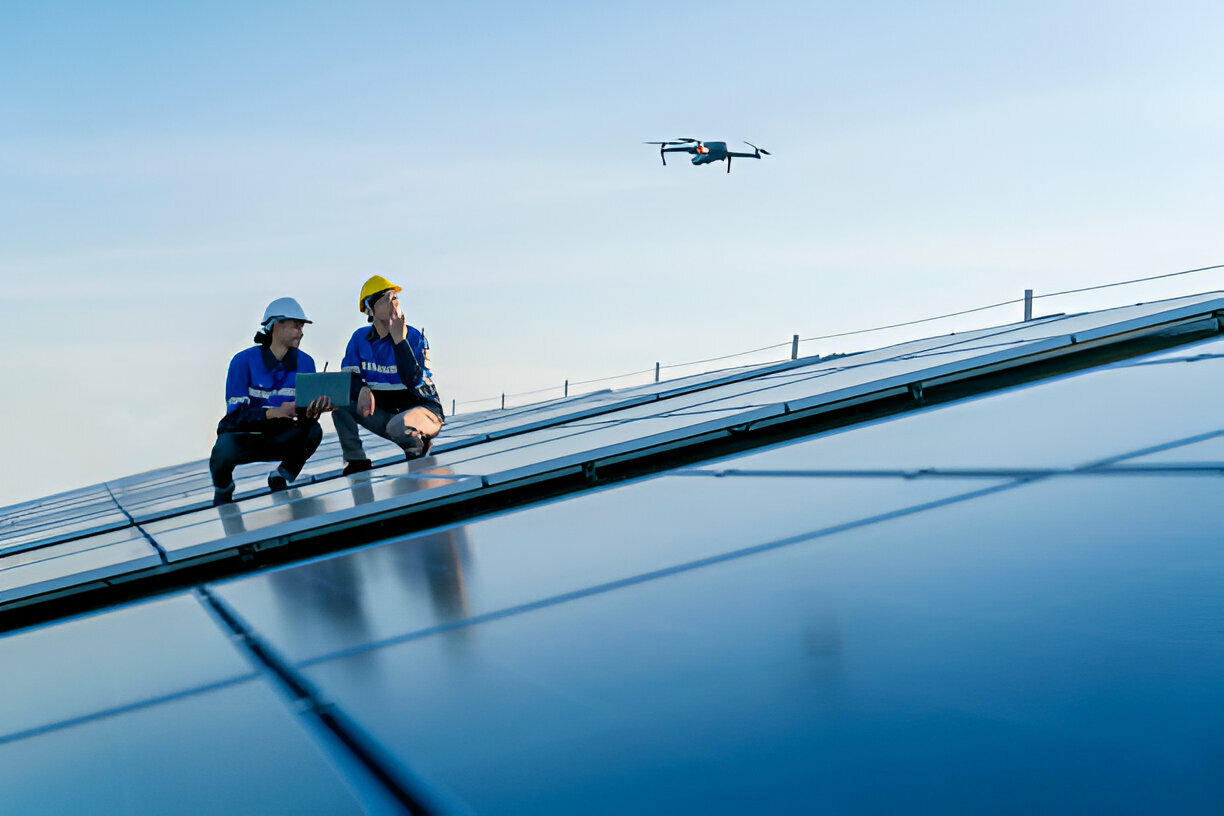
Drone technology has revolutionized several industries. The roofing industry also benefits from technology. Drones have made the roof inspection process much easier.
It has been seen that drone roof inspections are more accurate and contain better evidence in the form of visuals of the roof. It has also made the process of inspection quicker.
However, using a drone commercially to inspect roofs is not that simple. There are specific laws and regulations to comply with if you are upgrading your business with this technology.
What is a Drone Roof Inspection?
The use of Unmanned Aerial Vehicle (UAV), known as a drone, equipped with high-resolution cameras or thermal imaging sensors to assess the conditions of a roof is called drone roof inspection.
Drone roof inspection is a much easier and safer process for the roof inspectors. They don’t have to climb the ladders and check the roof, which can be fragile and collapse. In such a scenario, sometimes inspectors have to step back without a complete assessment. The inspectors don’t need to put themselves in danger to assess roof condition now.
How Can Drones Help in the Roofing Business?
Using a drone in the roofing business can help the company perform the job efficiently, along with ensuring the safety of the employees working on roof inspections. The drone can help a roofing business in the following ways:
Safety of the Worker
When a company conducts a roof inspection with a drone, its workers don’t need to climb steep roofs. The deteriorating roofs that can collapse anytime pose a danger to the climber, which can be avoided with the help of a drone.
Faster Inspections
A worker needs plenty of time to climb the roof and has to take each step carefully. This way, the inspection takes a lot of time. On the other hand, a drone can help to complete the assessment in less time.
Detailed Documentation
Drones can capture high-resolution images of the roof and can cover it from every possible angle. This helps in making a detailed document with evidence to make a report on the condition of the roof.
A Better Customer Experience
Drones cover all the elements of a roof and help the company to provide a detailed report with clear evidence. Thus, it helps to enhance customer satisfaction and trust in the business.
What are the Laws and Regulations for Drones in Roofing Businesses?
In the United States, to fly drones legally for commercial purposes, a business must comply with rules set by the Federal Aviation Administration (FAA). The business should have:
FAA Part 107 Certification
The commercial drones used by a business fall under the FAA’s Part 107 regulations. These regulations cover all the essential training and provide a set of rules to follow every time a drone is used.
Local State Laws
Some states have additional laws about drone usage. They may ask for special permits to fly drones in residential or urban areas. The business must follow those regulations to avoid fines and ensure the safety of people around.
Operational Restrictions
Drones are not allowed to fly near airports, stadiums, and high-security places. You will have to take special permission to fly drones there.
How to Get a Remote Pilot License for a Drone in the United States?
If you need to use the drones legally for your roof inspection business, you need to have a remote pilot certificate under Part 107 (FAA). The process of getting a drone license is as follows:
Meet the Eligibility Criteria
The requirements for the person who has to fly the drone are:
- At least 16 years of age
- Must be able to read, write, speak, and understand English
- Mentally and physically fit to fly a drone safely
To Pass the FAA Knowledge Test
FAA conducts a test that is necessary for applicants to pass. The test covers the following topics:
- Airspace classification
- Effects of weather on drones
- Information about emergency procedures
- FAA regulations about drones and penalties
Apply for Certification
Once you have passed the knowledge test, you need to apply to get a certificate. You can apply via the FAA’s portal and get a remote pilot certificate. The relevant department will run a background check, and then you’ll receive your certificate.
Renewal of Certificate
The pilots must take recurrent training courses every two years, so they can get their certificate renewed.
Can a Licensed Company Fly a Drone on Someone’s Property?
A license means that the business is eligible to fly a drone. However, you can’t fly a drone over someone’s property without their permission. Even at the time of inspection, the company should take written permission from the property owner. Verbal permissions can also become problematic in the end. The drone operator must be vigilant and shouldn’t violate someone’s privacy.
Conclusion
It seems cool to use a drone in the roofing business. But it is also efficient. This can help improve efficiency while performing a roof inspection. Along with the benefits of drones, a business must comply with the legal responsibilities.
The eligible companies that abide by the FAA’s regulations to get a remote pilot license and respect privacy during the inspection process are the best options these days to get a roof inspection.
If you are also interested in getting a detailed inspection of your roof in California and want to have a trustworthy report with a set of evidence, contact Orange and South Coast Property Services today. We provide thorough inspections so you can clearly visualize the condition of your roof with confidence.